
William Stuart on American Afterlife: The Rock, the Booth, and a Story Built to Be Heard

Updated: 3 days ago
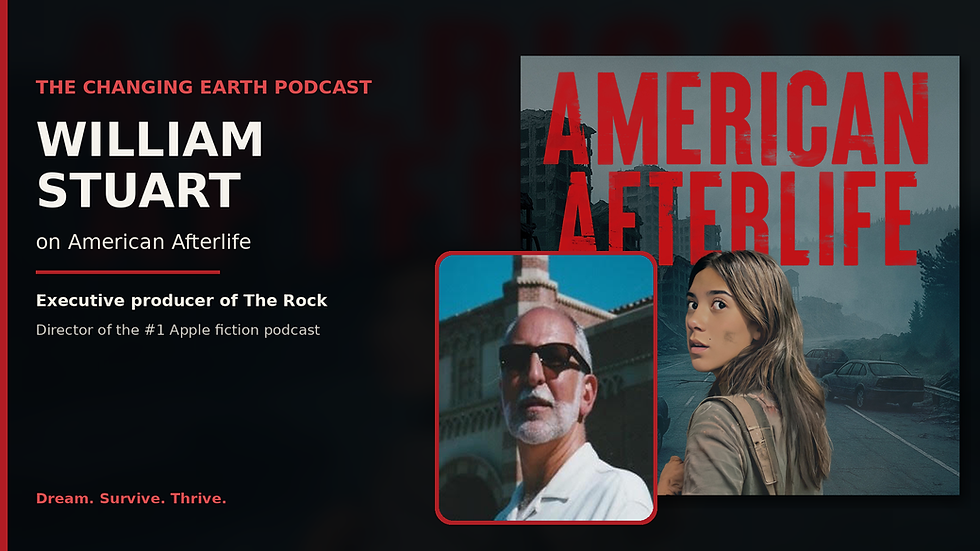
William Stuart has spent more than fifty years in the business. Studio jobs at Columbia, MGM, and 20th Century Fox. Production and distribution across Europe, the Middle East, and Australia. He developed and executive produced The Rock for Disney and Jerry Bruckheimer. For more than fifteen years he has been the U.S. representative for Barrandov Studios in Prague. His grandfather ran those stages before World War II.
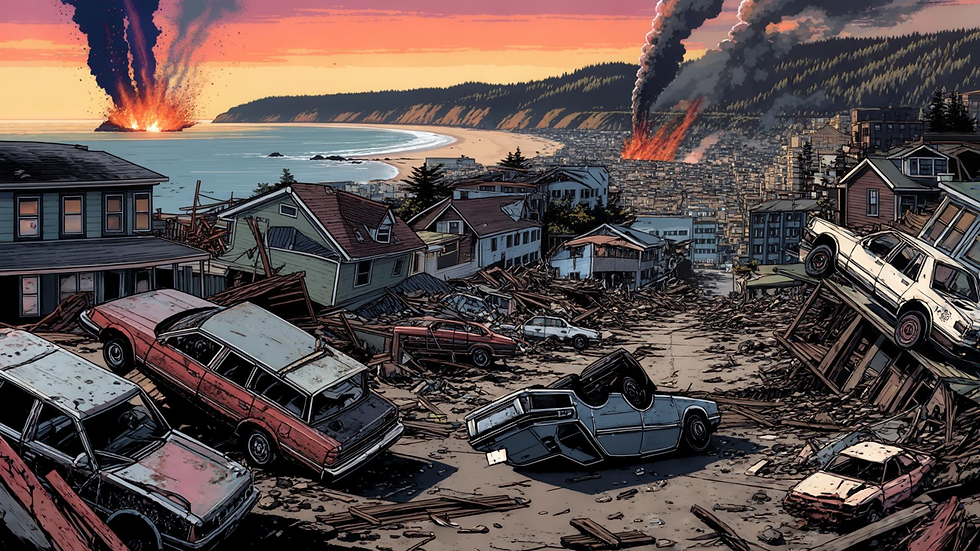
Right now he is president and CEO of Aurora Productions, and executive producer and director of American Afterlife, the scripted podcast adapted from Pedro Hoffmeister’s novel. Scarlett Estevez voices Cielo, a fifteen-year-old alone in a flooded Oregon city after a 9.2 Cascadia earthquake. Her mother is missing. Cielo’s job is to find her. The show hit number one in fiction on Apple Podcasts. Stuart and Benztown are developing it as a television series. Season two is already committed.
He brought that whole résumé onto The Changing Earth Podcast. What he wanted to talk about was sound.
From The Rock to American Afterlife
Sara opened where a lot of listeners would. The Rock is one of those movies people still hand to their kids.
Stuart did not live on that set. He partnered with Jerry Bruckheimer and spent real time on Alcatraz, which the production was allowed to use in full. The tourist bit where visitors are shut into a cell and told this is what it feels like made it into the film. He spent time with Nicolas Cage and with Sean Connery. Connery, he said, was a real gentleman. Cage was wonderful and a little crazy. Michael Bay was coming off commercials and directing one of his first big films. Stuart called it a wild ride that still holds up.
One detail for anyone who has rewatched the shower infiltration: that sequence was not shot on the island. The company built it at Sony Studios in Los Angeles. They did not build much at Alcatraz. The place already looked like itself, including the tourist-attraction version of the prison. People still stop him to talk about the movie.
Asked who, after fifty years, would still make his heart jump, he did not pick an actor. He picked Aaron Sorkin. He has followed Sorkin’s interviews on process, the locked room, the weekly script. He almost met him once in an airport line. Sorkin was walked past by a VIP handler. Stuart is still curious how that writer actually works.
A world you can close your eyes inside
American Afterlife is not an interview show. Stuart was clear on that split. He is not interested in producing an hour of two people talking. He wanted the dramatic form, built like a movie, with a soundscape that does the job of a camera.
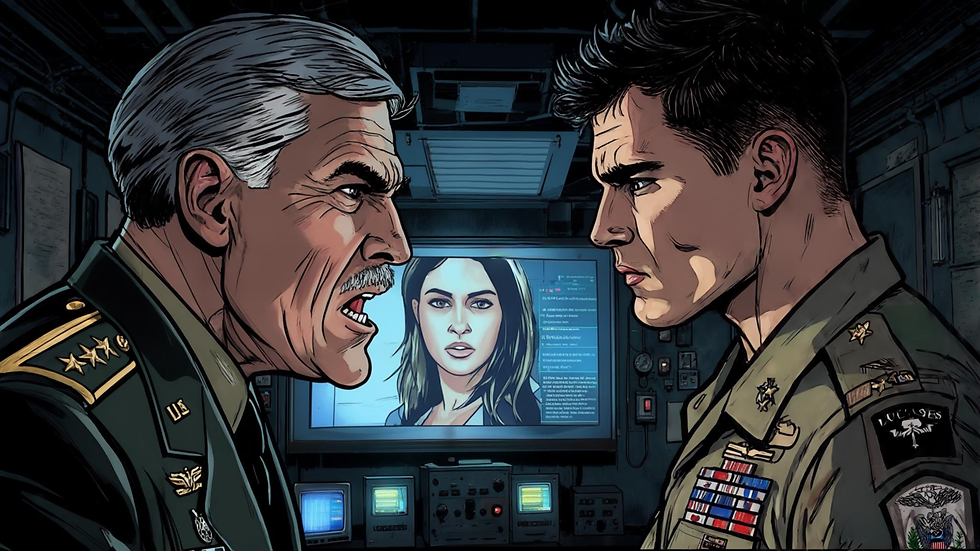
He used Homecoming as the caution. Early, well acted, and thin on world. A door closing. People mostly stuck in a building. He and the technicians decided to push the sound so a listener on earbuds could shut their eyes and be there. Music sits almost as high as the effects. In a film, a look can tell you the temperature of a room just changed. In audio, the score has to do that work. Scare you. Warn you. Tell you something is about to be funny.

The drinking sound, the one a few listeners clocked, he has heard about. Out of many thousands of comments, a handful. He is fine with that.
Sara came at the same problem from the other direction. The Changing Earth audio drama started closer to voices and a few effects and felt flat. Music became the scene change. Left-to-right footsteps in stereo so you hear someone walk past. Stuart’s note back was practical: her process is not as far from a funded booth as it looks. American Afterlife was approached like a film. It was still built in pieces.
How they actually recorded it
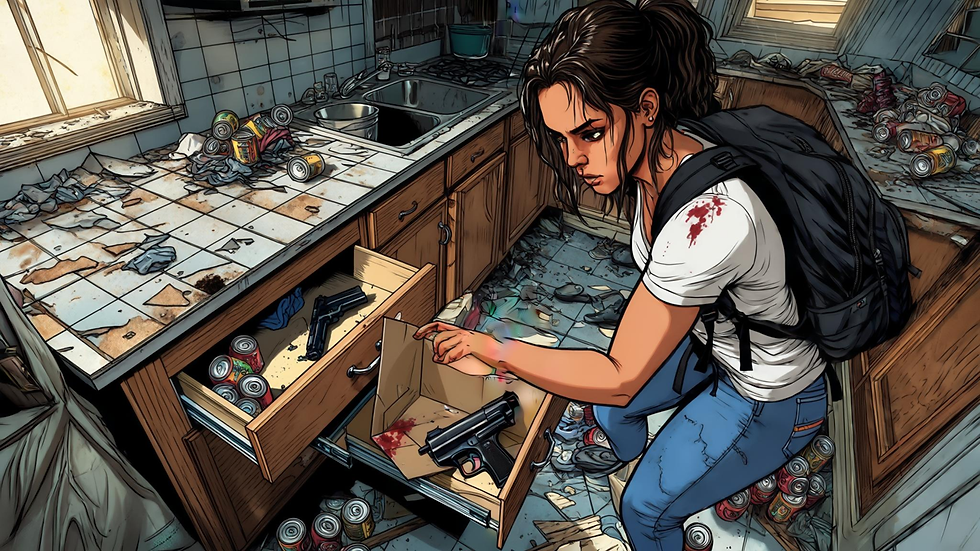
The cast was in the Los Angeles area. The booth was Benztown’s studio in Glendale. They took actors when they could get them.
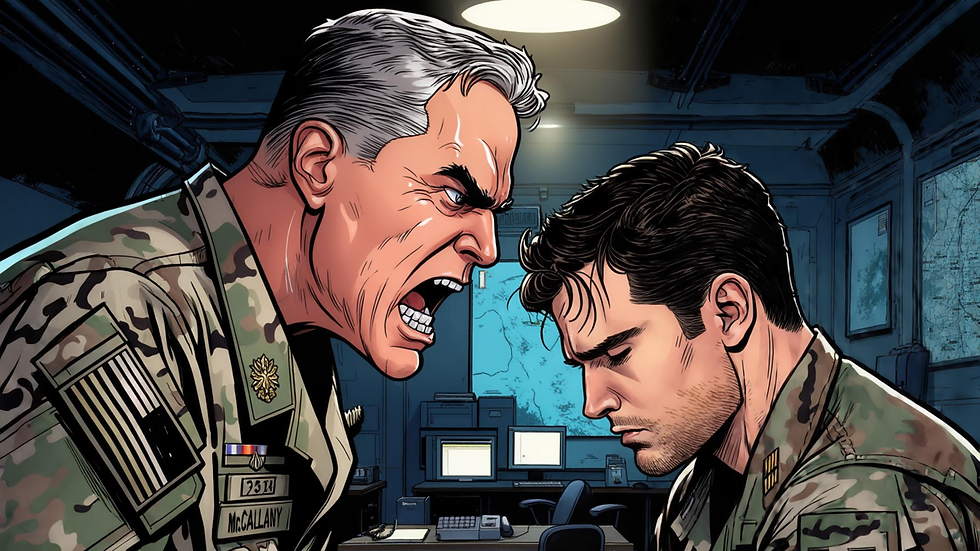
Scarlett Estevez went first, alone, about two and a half days through the scripts. Ted Owens (Charles) did some of his work remote and some in the studio. Josh Mesnick (Lucas) came in at a different time. Once the tracks were cut together, the gaps showed. They brought people back. Scarlett and Josh sat opposite each other for the interrogation, and the scene got more real.
Dialogue moved too. Some lines the writers had given a fifteen-year-old did not sit in her mouth. They softened them. The show carries strong language on purpose. Stuart said they were chasing two audiences: the science-fiction readers who already followed Hoffmeister’s book, and Scarlett’s younger followers, who needed a girl they could recognize. There is a cleaner version. He does not think it is as good.
Scarlett’s animation work helped, and it was not the same job. In animation she matches a picture. Here she had to close her eyes and enter the world. They talked the scenes before they rolled. What do you feel if you are out there alone and your mother is lost? He called her a very good actress. She could shift on a line and hand them two or three versions.
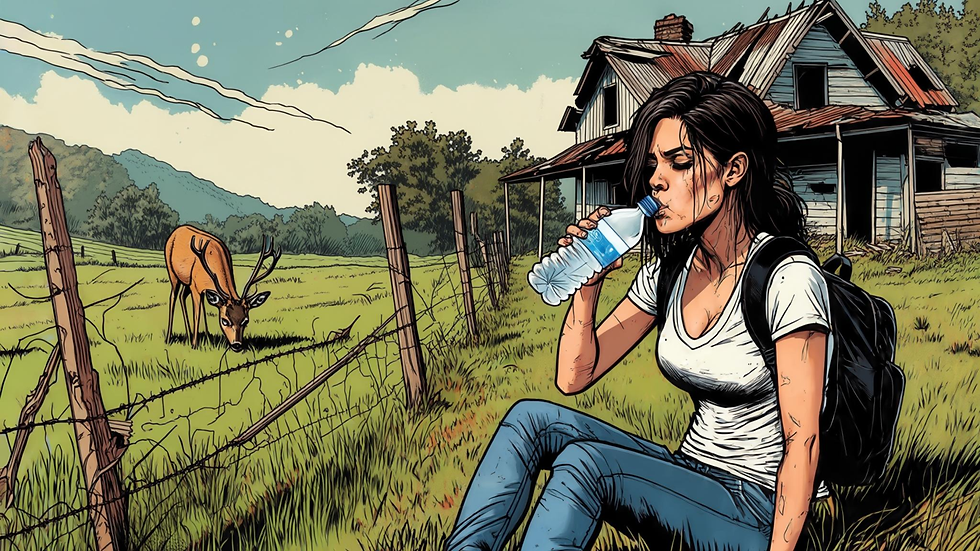
Sound cues were written into the script, including the glug. Actors often recorded naked, without the effects under them. Scarlett screamed into silence, then heard the world back and was surprised by what she had done. Editors and mixers later chose takes and dropped pauses where an effect had to live. Stuart’s line for the whole production: short of being a movie, it was pretty complicated.
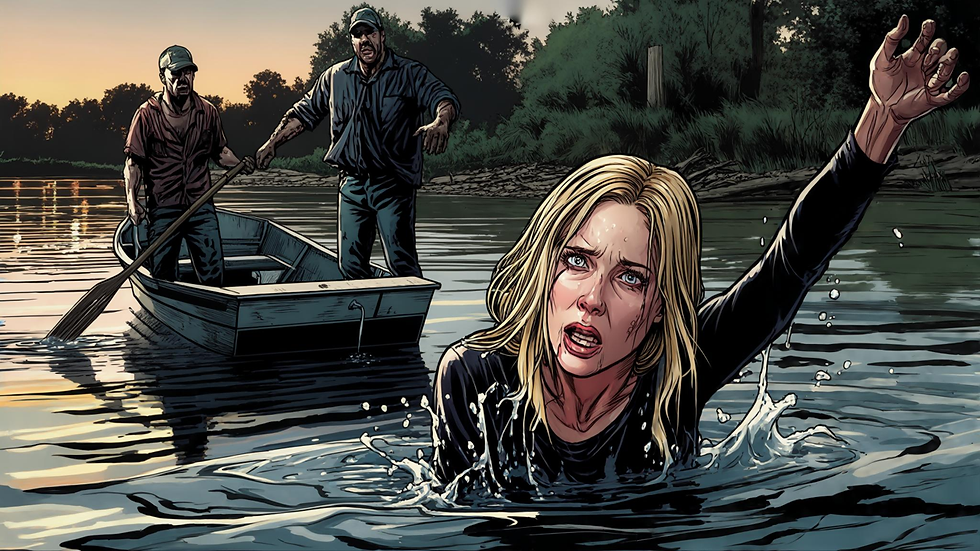
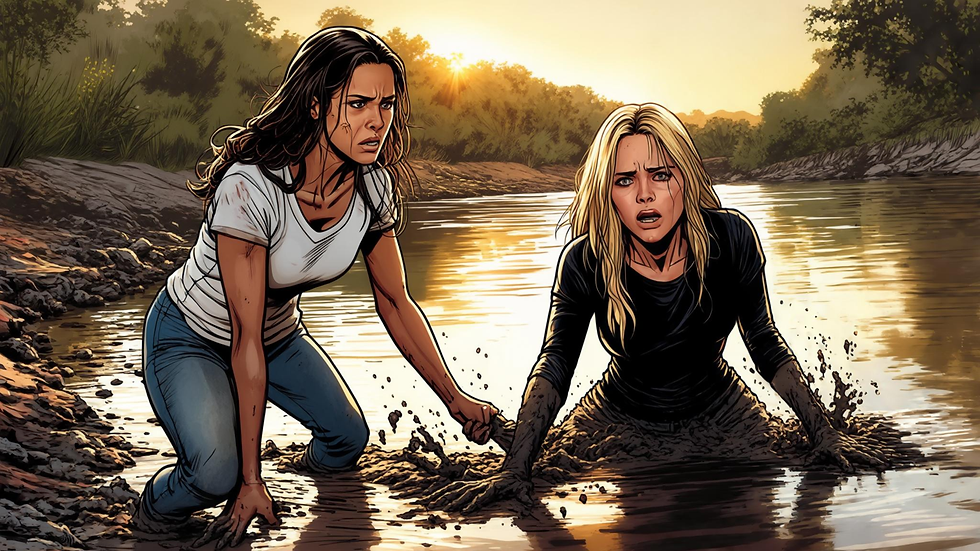
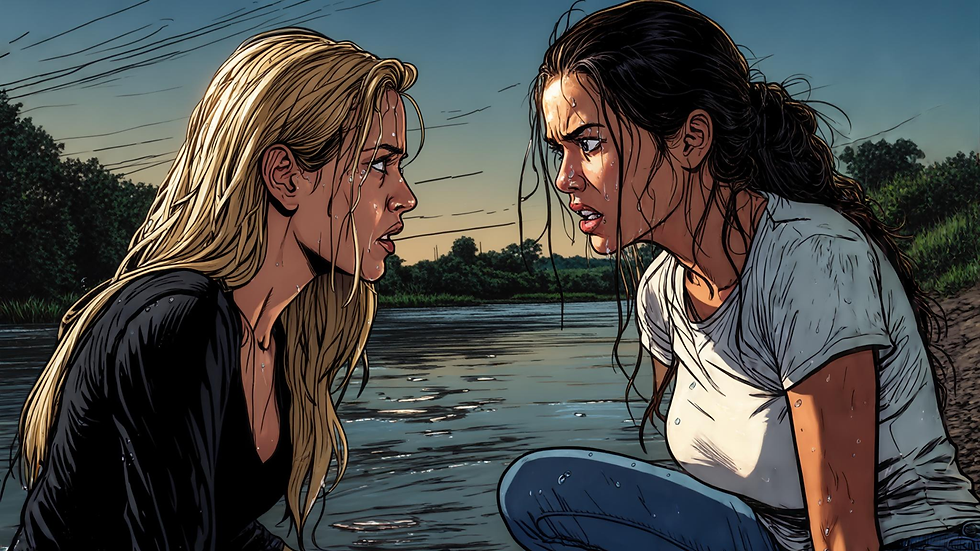
Fight scenes were the hard part. They can sound hokey. He compared it to a stage gunshot, which actors tell him always sounds fake, even with a blank, and which audiences have agreed to accept. The scene he struggled with most was the two repo men trying to drown a woman. It played. The problem that showed up later was voices. Hers sat too close to Scarlett’s, and they had to separate them so the listener knew who was in the water. Sara has done the same fix with brothers whose voices match, lifting one, lowering one, speeding the lighter read by a hair.
Narration, helicopters, and the edge of the disaster
The narration is Scarlett, and it is Cielo’s thoughts. At the start she is alone, so we are inside her head. Partway through, Lucas appears, and the frame shifts: she may be telling this under interrogation. Stuart used the room tone and the effects to mark which one you are in. Not every handoff is instant. Sara caught one helicopter cue and was not sure whether the aircraft was in Cielo’s scene or the next one. A few seconds of listening sorted it. Stuart wanted those outside pieces, pilots and Guard and Charles, so the show was wider than one girl in the rubble. That width is also the television argument. A series needs a world, not only a protagonist.

Hoffmeister lives in Eugene, on the fault he wrote about. The research is the quake, then the dam, then houses and lines down, then the chemicals of ordinary life in the water. Stuart told a version of that from his own street. He and his wife were in Altadena during the Eaton fire. About seven thousand homes burned around them. Theirs survived. Afterward the contamination went into the air and into the ground. The Army Corps of Engineers dug the empty lots down twelve to eighteen inches and hauled the soil out, the same logic as old lead paint. Sara, who works insurance in California by day, has had to tell policyholders the same thing: hazmat comes in because people do not think about what is in the walls until the walls are gone.

In the book, the event stays regional. Radio reports. Someone still talking about Cabo. Stuart said Hoffmeister kept it pretty honest, and that if you are following Cielo you are not going to Cabo. The adaptation took poetic license. A book of a few hundred pages became episodes of about twenty-two minutes. Detail had to go.

They argued about length. The audience they were chasing does not always sit still. Season two will be twelve episodes instead of six. They are still deciding whether twenty-five minutes is enough story without going dull. Sara’s listeners on The Changing Earth tend to chunk an episode, or wait and binge the season. She releases sixteen episodes in blocks of four, most of them closer to forty-five minutes than a hard hour. American Afterlife went weekly, dropped two episodes the first week, and cut short interstitials between, including one awkward minute of Charles opening the wrong door at the hotel where the Guard is bunked and finding Cielo. Listeners liked that one.
Why a producer made a podcast
Stuart’s larger point was about the film business, not the microphone. Independent movies have gotten hard. He went off and finished a documentary a couple of months ago just to keep working. He keeps fifteen or twenty projects alive. Five may sit at studios. A couple are independent. He can spend a year on something that reaches Universal, then get the call that the executive has left and the new team may not want it. The studio already spent the development money. The project is gone.
Consolidation has not helped. He does not understand the urge to buy a second studio before the first one is working. His line on the people running these companies: seasoned businesspeople, not always seasoned movie people, sitting on top of executives who already know the job.
So he looked at the books he had optioned and asked a different question. Why not do a podcast? He and Dave “Chachi” Denes at Benztown picked Hoffmeister’s novel because it could carry a cinematic audio production. They developed it like a movie. It went to number one on Apple. Benztown did the promotion. The cast has a best-ensemble-voice nomination, and they are asking listeners to vote in the people’s-choice side of that race.
He was direct about what he reads. Hoffmeister is at Crooked Lane, an imprint of a larger house. Stuart still shops by genre and by what a studio slate is missing. The old lunch, he said, was not always a pitch. It was “what are you looking for?” Then he either had it or went looking.
What came back from listeners was not mostly the quake. Young listeners wrote that they recognized Cielo. Trouble at school. The wish to be left alone. The reviews were strong. The listenership built across the six or seven weeks the season was dropping, then plateaued because there was nothing new to release. That is the content problem Sara knows from the other side. Sixteen episodes, then the pause to make the next block.
Uniquely familiar
Stuart’s description of studio taste is the one worth keeping. They are sheep. A great Western comes back and everyone wants a Western. An executive friend at Disney made Crimson Tide because he thought it had been a while since a submarine movie. The film works because it knowingly collects the classic beats: the captain and the other officer at odds, the flooded compartment, the men behind a door that will not open. Someone once called the brief “uniquely familiar.” You know the kind of story. It is still different. Movies that leave the box entirely and still work are rare. One of his favorites is Slumdog Millionaire. He and his wife walked into a Fox screening not knowing what it was. About fifty people came out talking.
That is the lane The Changing Earth has been in since the first novel in 2014. One book became an eleven-novel series. Earthquakes, a climate shift, rising water, refugees, and a family trying to hold ground. The audio drama is that story performed. Sara writes it and voices the lead. L. Douglas Hogan plays T.J. Swanson, the bounty hunter listeners love to hate. It is survival without a costume on the threat. Stuart does not get the zombie craze. He was surprised The Walking Dead held. Sara’s answer, from the preparedness side of her audience, was that you could take the dead out of a lot of those episodes and the draw would still be how people live. The Last of Us works, for her, because the fungus is the pressure and the relationship is the story. American Afterlife puts the pressure on a regional quake, a failed dam, bad water, and a girl looking for her mother. Same shelf. Different map.
If you only have twenty minutes
Listen to American Afterlife on Apple, Spotify, iHeart, or at https://americanafterlife.com/. Start with the season. The sound is clean, the world is specific, and Cielo is the reason it charted.
Then come back to The Changing Earth Audio Drama. New live shows land on the Prepper Broadcasting Network. The story world, the novels, and the audio drama live at ChangingEarthSeries.com.
Dream. Survive. Thrive.


Comments